|
MODEL 1876 PRAIRIE BELT – FIRST PATTERN – SCARCE
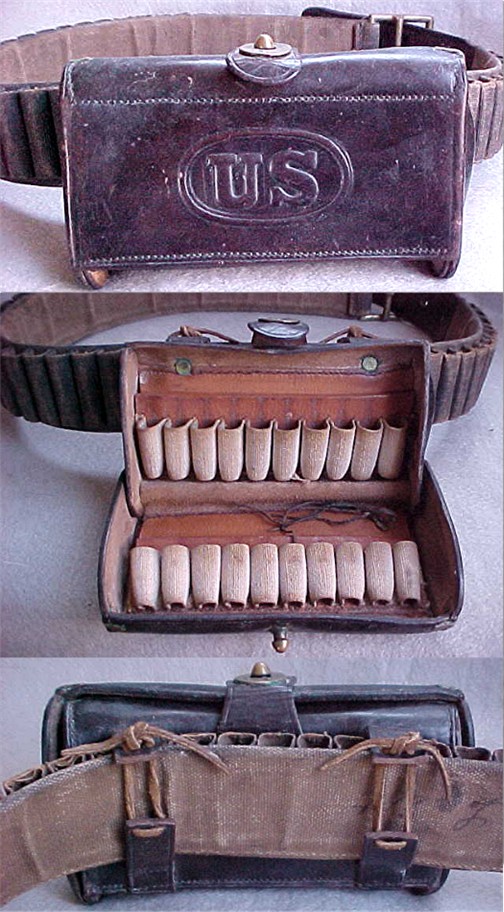
DARK BLUE UNIT DYED VARIANT – w/ CUT LOOP MCKEEVER
CARTRIDGE BOX – AN EXCELLENT INDIAN WARS INFANTRY SET:
This is one of the scarcer known variants of the Model
1876 Prairie Cartridge Belt, having been dyed or painted
a deep indigo blue. Although quite scarce with only a
very few known specimens held in modern collections,
these indigo colored belts are believed to have been
used in some quantity by at least one infantry unit.
This is the very same belt and cartridge box pictured on
pages 239-240 of American Military and Naval Belts,
1812-1902 by R. Stephen Dorsey, and was originally
acquired from the author’s research collection.

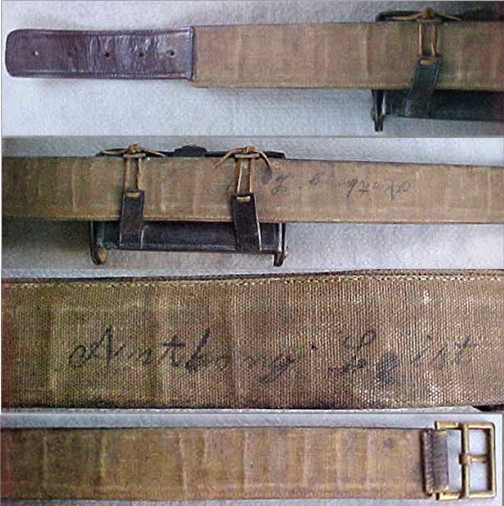
While in very good condition and showing little, if any,
evidence of use, this belt was apparently issued to a
soldier in the field. In addition to the application of
the indigo color on the front surface of the belt body,
the soldier wrote his name in ink on the undyed interior
surface of the belt, “Anthony L(?)ist”.
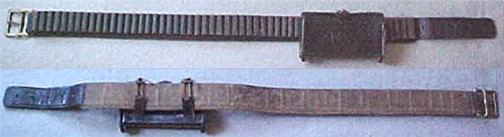
This belt is particularly collectable as it is one of
the scarcer narrow First Pattern Model 1876 Prairie
Belts. The combined length of the body and tongue is 40
½” and there are 54 cartridge loops. The billet has
been shortened to 7”, a common and typical modification
the small waisted soldiers found necessary due to the
original and overly generous length of 13”. The canvas
loops are in excellent condition showing no collapse of
the varnished loops and only very minor fraying to the
upper and lower edges of a few of the loops. The body
of the belt is very solid with no damage to exterior or
interior surfaces of the canvas, and the seam along the
bottom of the belt is fully intact. The indigo color is
consistent across the exterior of the belt, showing some
fading or wear on the high points of the loops. The
billet is overall very smooth with a shiny surface and
only minor flexing with no crazing or loss of finish due
to flaking. The original buckle is present.
Mounted on the belt is a Second Pattern McKeever
Cartridge Box, modified to fit this First Pattern
Cartridge Belt by cutting the belt loops on the reverse
of the box and fitting the ends of the cut loops with
leather thongs. When tied together, the cut loops were
large enough to allow the box to be carried on the belt,
which increased the ready supply of ammunition the
soldier carried on his person – a significant benefit to
a soldier on campaign and far from a source of resupply.
This type of modification, employing these “cut loop”
cartridge boxes and pouches, was only possible with the
early narrow First Pattern Model 1876 Cartridge Belts.
The later Second and Third Pattern Belts were widened to
the point that even with the cartridge box belt loops
cut, they would not fit properly over the wider belts,
and hence this modification was limited to the short
period in which these early narrow belts were in use.
The modifications as found on this belt and cartridge
belt set define it as a classic Indian War Era, unit
issued, and field used, specimen. That so few of these
modified accoutrements survive today can be easily
explained when viewed through the Ordnance Department’s
process of issue and return. When the units received
new issues of current equipment and returned the
obsolete accoutrements and equipment to the Ordnance
Depots, those pieces that had been modified such as this
belt and cartridge box were looked upon by the Ordnance
Department personnel as damaged beyond repair, or the
necessary repairs to return the item to its original
configuration were not cost effective – especially since
it was obsolete equipment. It is very likely the
modified pieces were condemned and destroyed with the
other unserviceable equipment, and they simply did not
survive to be funneled into the surplus sales that would
eventually lead to the collectors’ market.
The small number of surviving modified accoutrements
serves as quiet testimony of the efforts of the soldiers
and the Ordnance Department to adapt stocks of surplus
material to suit the needs encountered on the Frontier.
In spite of the number of these belts and cartridge
boxes that must have been modified during the period,
surviving examples such as these are rare and they are a
fascinating field of collecting in their own right.
This belt and cartridge box set is remarkably unusual,
and of the quality that combined with an early
Springfield Trapdoor Rifle and Bayonet, would create a
notable Indian War Infantry grouping.
SOLD
NOTE: Some thirty-five years
ago I was fortunate enough to have the first opportunity
to examine this belt and for many years after I actively
sought just such a specimen for my own collection
without finding another that was available for
purchase. From my own personal experience, I cannot
emphasize enough just how difficult these blue Prairie
Belts are to find. If your collection includes an
extensive selection of Indian War period cartridge
belts, this interesting dark blue variant will
definitely add significantly to your display.
|