|
PATTERN 1911 US ARMY TROPICAL COTTON SERVICE COAT
– 27TH INFANTRY REGIMENT – AMERICAN
EXPEDITIONARY FORCE SIBERIA & PHILIPPINE ISLANDS UNIFORM
ITEM – VERY GOOD CONDITION:
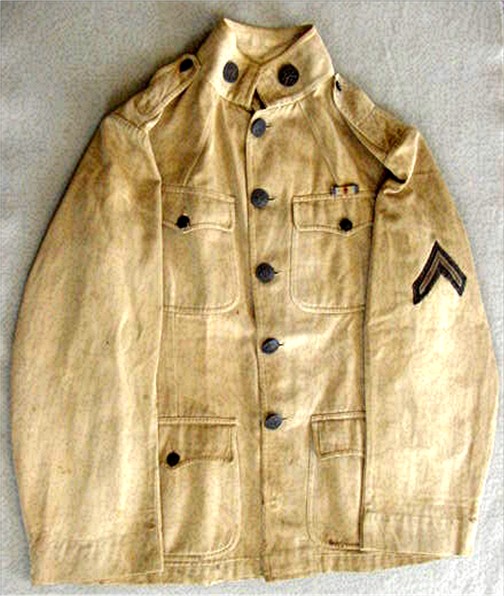
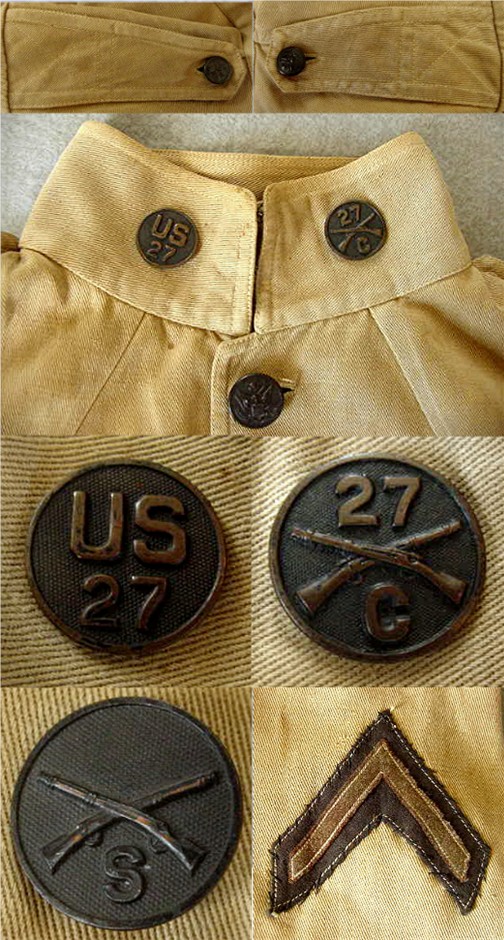
This Pattern 1911 US Army
Tropical Cotton Service Coat, bears the regimental
collar disc insignia of the 27TH US Infantry
Regiment, Company C. During the service life of this
uniform coat, the regiment notably participated in the
Siberian Expedition in 1918-1920 and subsequently saw
service in the Philippine Islands.
The 27TH U.S. Infantry, activated in 1901,
began to build its history with its first deployment to
the Philippines in 1902, seeing action against the
insurrectionist forces. Having returned from the
Philippines in 1904-1905,
the regiment was garrisoned
at Fort Sheridan outside Chicago and Columbus Barracks
in Ohio. The 27TH was once again sent
overseas by way of Manila and then onto Vladivostok in
August of 1918 as part of the American Expeditionary
Force – Siberia, an element of a multi-national force
sent to protect their collective national interests
threatened by the Russian Civil War. It was during this
assignment in Siberia that the Bolsheviks dubbed the
regiment with the nickname “Wolfhounds”, which it
retains to this day as a part of the unit’s heritage.
From Siberia, the regiment was reassigned to the
Philippines in 1920.
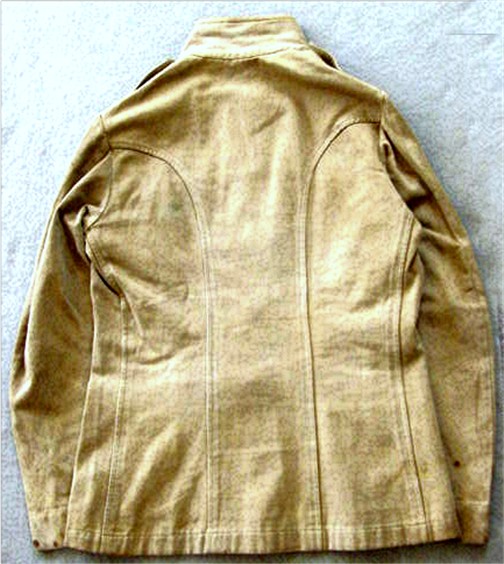
Given the exposure during two demanding overseas
assignments, and showing obvious signs of having been
issued and worn in the course of the soldier’s service,
this uniform coat has survived quite well.
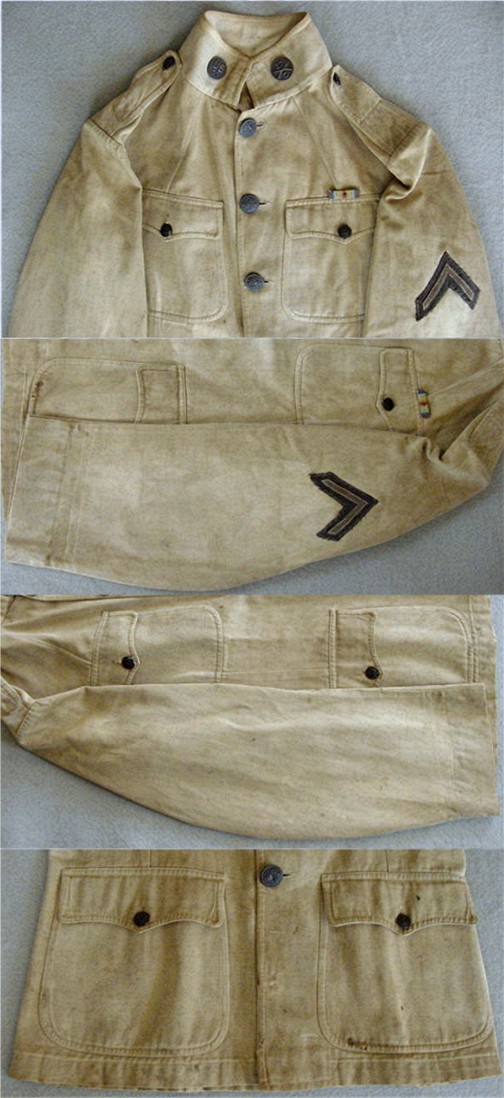
The cloth is still strong
with no weak points or deterioration from wear or age.
The khaki retains an even color overall, but it has
slightly faded with exposure to the tropical sun of the
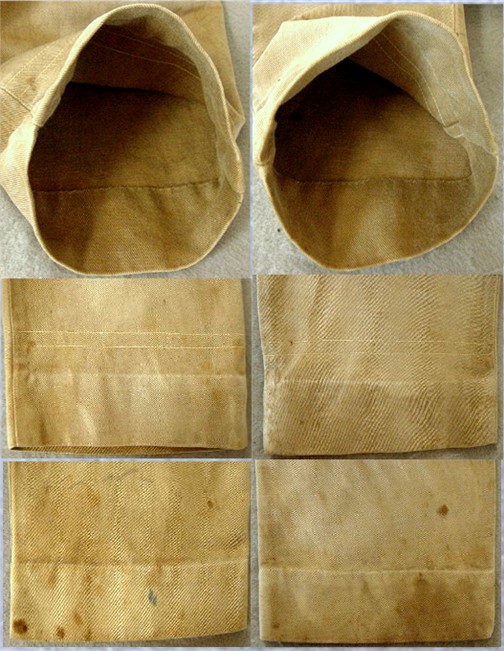
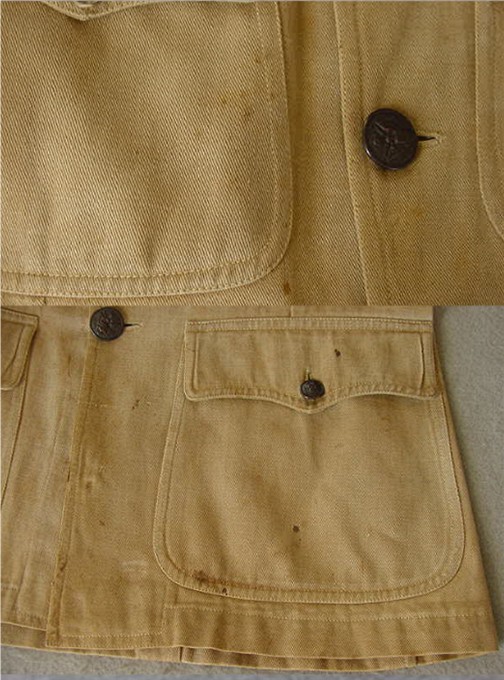
Philippines. There are some very small stains at the
edge of the sleeve cuffs, the bottom edge of one lower
pocket and low on the coat body which are normal for a
lower ranking soldier to have acquired during his labors
in the sorts of working parties to which he would have
been assigned. Just normal evidence of daily wear, but
not enough to prevented him from continuing to wear the
coat.
Both collar discs are present, and all of the original
buttons are present and intact down the front, on the
epaulets and pocket flaps. The private chevron on the
left sleeve is full form and shows little wear. Above
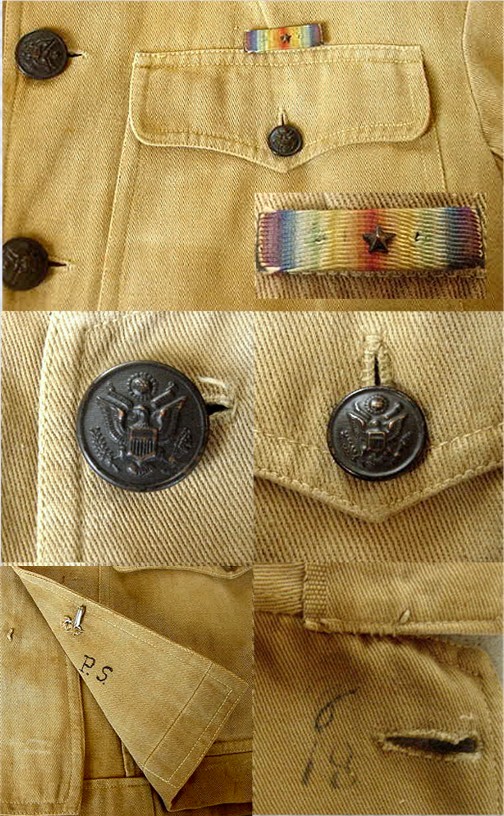
the left breast pocket is pinned a World War One Victory
Ribbon, showing some wear and fading – obviously worn
during the soldier’s period of service.
The ribbon is fixed with a
bronze campaign star, probably recognizing the soldier’s
participation in the American Expeditionary Force –
Siberia in 1918-1920. At some point, the soldier who
wore this coat was assigned to the Service and Supply
Company of the regiment, indicated by the extra collar
disc bearing “27 S” which was found in the breast pocket
– worn during that assignment instead of the “27 C”
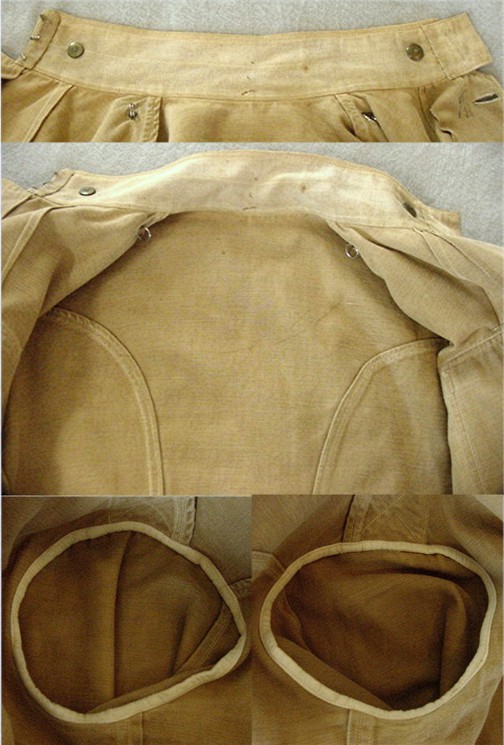
company disc. The hook and loop closure at the bottom
of the front opening is still intact. The edges of the
collar, the cuffs, and along the bottom of the coat are
intact with no wear – all areas where fraying normally
occurs on these coats - and all of the seams are intact.
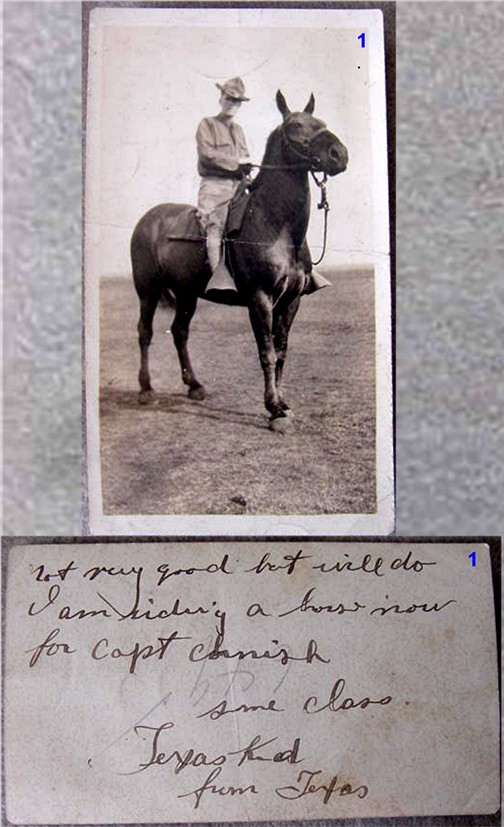
An interesting bonus to the intrinsic value of this coat
is a grouping of period photographs found in one of the
lower front pockets which were presumably taken during
the course of the soldier’s service. The photo of the
soldier on horse back bears an inscription which
includes the name of the officer who owned the horse,
and with some effort that officer might be identified
back to the 27TH Infantry.
It is fairly certain this early uniform coat was issued
and worn by a soldier in the 27TH Infantry
Regiment
during his service in the Siberian
Expedition, and likely later in the Philippine Islands
and presents here as a scarce surviving uniform of those
two theaters of operation which certainly took their
toll on the soldiers’ clothing issue.
(0584) $300
NOTE: Photographing wool
material presents some interesting challenges in
lighting and contrast. It results in a trade off
between trying to maintain the accurate and consistent
coloring between photographs and providing sufficient
detail of specific features. Any variations in the
coloring you see in the photographs below is due to the
limitations of the photography and is not due to fading,
bleached areas, or discoloration of the material.
|